History is the witness. Whether it was Marx’s Communist Manifesto (1848), Nehru’s Tryst with Destiny (1947), the constitutions of democratic nations of the world, the World Peace Council’s call for the aboli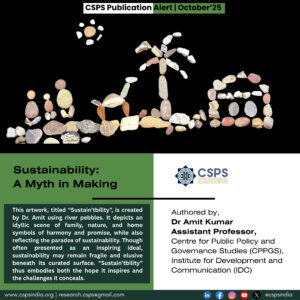 tion of war and the creation of a peaceful and just global society, or the United Nations General Assembly’s Sustainable Development Goals (SDGs) addressing a wide range of global challenges and preparing a blueprint to achieve a better and more sustainable future for all, everything seemed a utopian concept for once.
Human societies are diverse in cultural practices, including customs, religion, community, language, and ethnicity. Any attempt to address these issues without orienting them towards a democratic nation-state is rendered futile. However, this does not support the notion that no other options are available. Instead, it emphasises the requirement for a comprehensive approach to integrating all aspects effectively. Let it be a utopia if so. Multicultural societies offer a wealth of diversity and cultural richness yet also present a range of challenges, including communication barriers, the perception of prejudice and discrimination on a regional level, cultural assimilation, unequal distribution of resources, and political and ideological differences.
Although primarily stemming from the diverse social ethos, these challenges have a cascading effect on other aspects, including politics and the economy. It can indeed be argued that challenging the status quo and the workings of contemporary ruling administrations and organisations is a daunting task, and this text does not purport to cast doubt on the integrity of such entities. They operate within the democratic framework and its elected government and not only strive to promote development but also effectively address the various challenges that they face. However, even after addressing the challenges and the need for integration along the lines of multicultural perspective, it is essential to maintain the integrity of the argument in order to avoid inadvertently suppressing the diverse heritage of these multicultural realms.
Let’s begin with an exercise. A billionaire’s son and a daily-wage labourer’s son happened to lead all groups in a school project titled “Our Common Future” rooted in the sustainability principle. The framework was paraded and eulogised as a panacea, as the project was thoroughly conceptualised, hypothesised with whatnot achievable goals. Consequently, milestones were carved and targets were assigned to each representative of their respective groups. A special fund was carved out of the school budget. And, so it began. Reports were requested on the evaluation of status quo, and experts were consulted to perform a heuristic investigation. The brainstorming sessions were held, the status quo was analytically criticised and considered. Based on the concerns stressed upon, milestones were assigned and set to achieve, considering the individual characteristics and concerns of each group. When the time came, all group representatives presented their reports, and it turned out to be one of the most tragic comedies of all time.
Let us understand how sustainability as a sugarcoated shotgun is devised to be fired upon someone else’s shoulder. I intend to deconstruct this scam in these four contexts:
- Sorry State of Affairs: Five Decade Postpone Rule
- Rulers and Not Ruled By
- If I Can, I Don’t Have To
- By Whom and For Whom? From Whose to Whome?
Sorry State of Affairs: Five Decade Postpone Rule
Speaking of Our Common Future or the Sustainable Future, it seems a delightful thing imagining a future, so self-aware, responsible towards their duties for the people, and by the people. However, it doesn’t matter how big or aesthetically colourful a soap bubble appears in bright sunlight, as long as it is destined to meet a bubble’s fate. Not only short-lived, but also futile. The fate of SDGs is also like these soap bubbles, as they appear aesthetically pleasing but tend to burst (promising but unattainable). And to relive that beauty, one needs to blow these bubbles again. Similarly, when these SDGs targets are not met as expected, they are postponed to another year down the line. In other words, postponing it to some five decades ahead, refilling old wine in new bottles with some fancy jargon cherry on top, such as the all-time new, more inclusive, more integrated and more innovative agenda document. In reality, just weathering away the rebellious contemporaries, covering failures and embedded structural inefficiencies.
Rulers and Not Ruled By
The second context takes off from the very premise that one must have enough not to let the course of their lives be dictated by someone else, for it is inherently to be human to dream of ruling every other living being but not be ruled by any. This profound sense of not being ruled by anyone has distorted the ideas of freedom, freedom of speech, dissent, accountability, and equal access to the means of living a decent and dignified life. And fulfil the same, the never-ending loop of accumulation of whatever means precedes.
If I Can, I Don’t Have To
Let’s take an example of an entertainment industry model, who has a house full of whatnot (to call it a fulfilled life) and rest just idealised it. She is worried about her wardrobe being small. Another example of a renowned Bollywood director, whose one jacket alone costs the lifetime earnings of a daily-wage labourer. It might mean nothing for some, but for some, it is production, promotion and accumulation of idiotic luxury and non-essential products. However, despite being familiar with such biased trivia, the ultimate destination that everyone must work for is to be affluent, because dying poor has a bad reputation to it.
From an early stage, humans are inoculated with the idea of not dying poor. This vilification of the thought, ‘dying poor,’ is justified by instilling the fear of suffering in the context of self and of their dear and near ones. This suffering ranges from the ability or inability to deal with the bodily and mental aspects of pain to the capability or incapability to afford the means to get rid of such misery. However, these ability and capability aspects raise questions about whether it is the fear of suffering or the thought of being unable to tolerate the misery of being poor. However, such conditioning is sustained through the promotion of taking high moral ground. For example, one might have been born poor but should not die poor. Hence, the vilification of the dying poor is packaged and branded to keep every other individual in line, arranging means for the unseen and unpredictable.
I used to wonder back in childhood, often while growing up, getting educated, and, most importantly, learning anything that can enhance our chances of employability, made me realise that what if we give a shot at dying poor? How worse can dying poor be? More likely to take a different road, a less travelled one, as Robert Frost would have said. What if all hands stopped working those extra hours? What if all those brilliant minds stopped thinking unnecessarily and worrying about getting rich one day? What if all of us accept the basic tenet of humans being mortal? If things had been different from what they are now, would these humans be divided into the lines of poor and rich like they are?
In a nutshell, this whole charade of not dying poor revolves around three axes, i.e., individual aspirations of people, individuals being acquisitive-centric and progeny-centric.
- Individual Aspiration: “In the Race of One Day, I Will Be Rich”
People are not poor because they were born into low-income families with no generational wealth, but because they lack it. The worst of all is waking up every morning with the mindset that I must earn more today. More than yesterday’s Me. More than someone. More than the rest. But the idea of ‘earning more’ traps the very person in this never-ending loop of earning and false dream of reaching somewhere.
- Being Acquisitive-Centric: “In the Name of the Holy Market, All Above”
Market plays a significant role in shaping consumers’ behaviours, particularly by associating relative symbolic values with its products and exploiting consumers’ intimate emotions like pride, self-respect, their role and duties, such as the role of providers and protectors. Market outrightly discards the sustainability measures and promotes the principles of accumulation and conspicuous consumption. Taunting consumers based on their low purchasing capacity on one hand, on the other hand, it encourages the privileged ones to accumulate without letting them brainstorm how the other halves are deprived of even basic amenities.
- Being Progeny-Centric: “I Have Suffered Enough, My Children Should Not”
How sure are you that your children are not going to suffer? All you can leave behind is some lump-sum amount, but financial assurance alone cannot guarantee that your children will not suffer. Your struggle might have been regarding financial constraints or not having someone to guide you. However, theirs will vary. So, in that context, here’s my question: Is it too early to say that suffering is also inevitable like death? The form of suffering might be different, but it will be there. If death is inevitable, how does it matter whether you die poor or rich? If suffering is unavoidable, what are these whispering promises all about, being the king of the city one day? How does it matter what one becomes if the result is the same- a not-moving, cold body eager to decompose?
Given the context, here resides the third context, i.e., as long as I am capable of affording, I don’t have to live by sustainable measures.
The question alone is not of doomed fate of milestones or targets set, but of the unknown beneficiaries. Let’s assume that citizens have become accountable and responsibly save it for their future generations. But here the question arises. Whose future generations, a billionaire’s, a politician’s, a business tycoon’s, a working professional’s, a labourer’s, a beggar’s or a farmer’s? For instance, what are the policy measures taken to ensure that a farmer or a labourer’s future generation will surely be prioritised because their current generation is utilising their resources at the most optimum level and binding themselves to core ethics of sustainability like saving water, saving trees, saving natural resources, etc. Truth be told, not a single measure to ensure that it would be your generation reaping the fruits of your ancestors. It would be whoever is already privy to more than enough resources. The one who is capable enough to afford those resources. A billionaire’s son would always be prioritised to be a premium beneficiary of so-called ‘future generation’ to whom a daily-wage labourer is expected to save water today, save soil today, or save sources of energy, fuel, food, etc.
In other words, if I save a ‘these’ amount of resources (be it water saved, air not polluted, other resources conservated or utilised sustainably) in my lifetime, am I allowed to expect that my future generation would be entitled to access at least whatever reserve of resources are there, as I have saved, conservated, or utilised it sustainably all resources keeping in mind my future generation’s well-being
Or is it only for those, or have I saved the resources for those who can afford? It doesn’t matter whether their ancestor believed in a sustainable lifestyle or not.
So, whose future generation are we supposed to save it for? Shouldn’t there be some generational measurement tool to prioritise families who actually practised sustainability ethics and made some difference?
To conclude, individuals, governments, and organisations deemed accountable must strive for understanding, acceptance, and inclusivity in order to foster a harmonious and cohesive society. It may include initiatives such as fostering intercultural dialogue, implementing policies to address discrimination and inequality, and promoting the preservation of cultural traditions among all varieties of marginalisation. Moreover, this is where the need for a utopian manifesto becomes paramount, as it outlines a conceptualisation of an optimal society comprising a set of concepts and principles that, if implemented, would help to create a more just, equitable, and harmonious society- a more realistic and concrete definition of “Our Common Future”.
*The opinions, analyses, and conclusions expressed in this article are solely those of the author(s) and do not necessarily reflect the views or the affiliated organization.
Author Bio: Dr Amit Kumar is an Assistant Professor, Centre for Public Policy and Governance Studies (CPPGS), Institute for Development and Communication (IDC), Chandigarh, India.