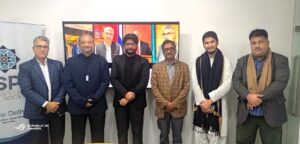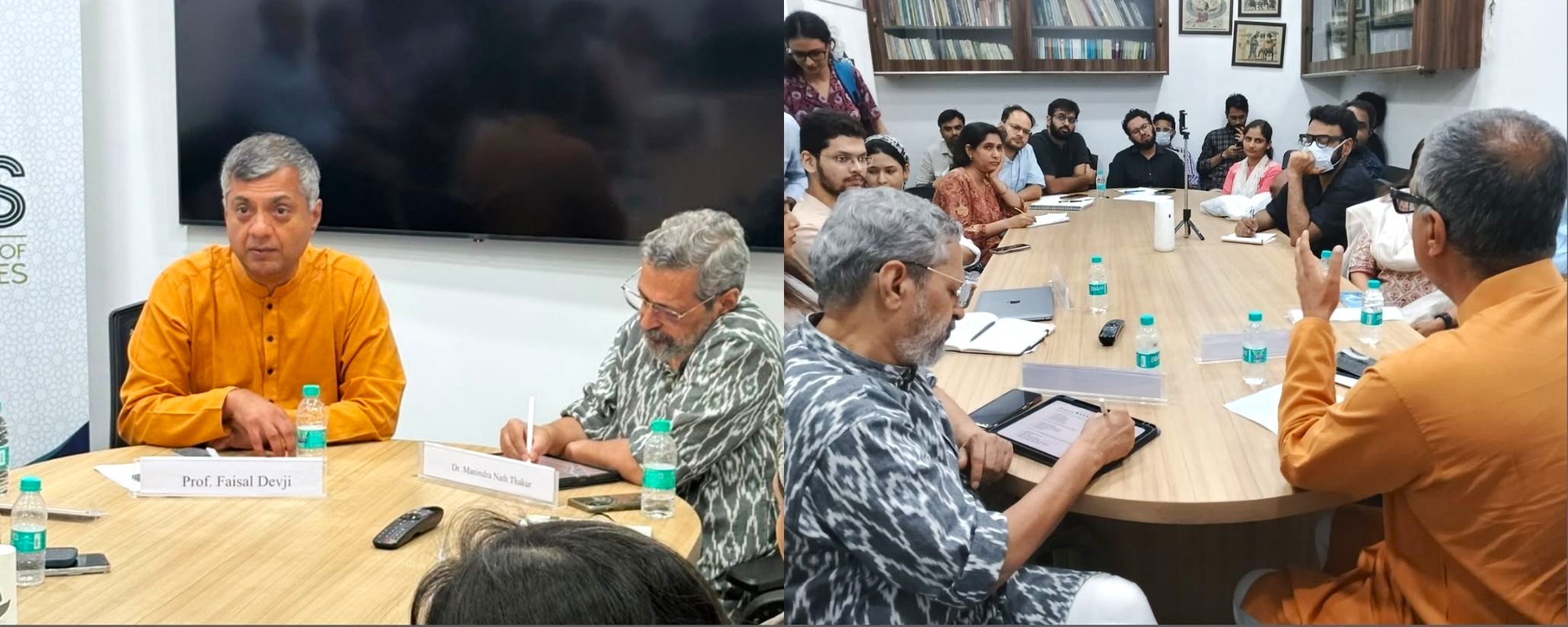
The Centre for Studies of Plural Societies (CSPS) organised a special lecture titled “The Changing Geopolitics of the Middle East: Is Donald Trump In or Out?”, bringing together critical perspectives on the evolving political, strategic, and diplomatic dynamics of the Middle East. The lecture featured Dr Muqtedar Khan, scholar on Islam, democracy, and good governance, and Dr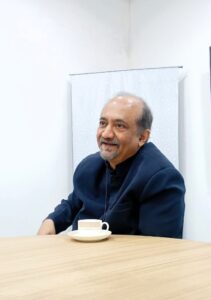 M. Shahid Siddiqui, Editor-in-Chief of WorldAffairs Magazine.
The session addressed urgent questions surrounding power shifts in the Middle East, the role of the United States in regional conflicts, and the implications of changing American political leadership for global and regional geopolitics. Against the backdrop of ongoing conflicts, diplomatic realignments, and intensifying great-power competition, the discussion offered a timely and nuanced analysis of U.S. foreign policy in the region.
Key Themes and Interventions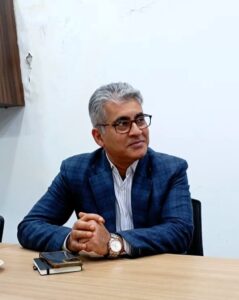
Dr. Muqtedar Khan examined the broader ideological and strategic foundations of U.S. engagement in the Middle East, situating recent developments within longer trajectories of American foreign policy. Drawing on his extensive scholarship, he reflected on how leadership styles, domestic political considerations in the United States, and shifting global power equations influence policy decisions in the region. Dr. Khan emphasised that the question of whether Donald Trump is “in or out” must be understood not merely in electoral terms, but in relation to enduring structural interests, alliances, and ideological orientations shaping U.S. involvement in the Middle East.
Dr. M. Shahid Siddiqui offered a media and policy-focused perspective, analysing how geopolitical narratives are constructed, circulated, and contested in global public discourse. Reflecting on his experience as a journalist and editor, he highlighted the role of international media, strategic communication, and information flows in shaping perceptions of conflict, diplomacy, and power. Dr. Siddiqui underscored the need to critically assess how policy decisions are framed and legitimised, particularly in contexts marked by violence, humanitarian crises, and competing geopolitical interests.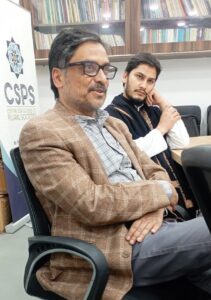
Discussion and Audience Engagement
The lecture was followed by an engaging interaction with the audience, where participants raised questions on the future of U.S.–Middle East relations, the impact of domestic American politics on foreign policy continuity, and the implications of emerging regional alliances. The discussion reflected a strong interest in understanding how global power shifts intersect with regional realities and local consequences.
Concluding Reflections
The lecture reaffirmed CSPS’s commitment to fostering informed and critical dialogue on pressing global issues. By bringing together scholarly insight and media analysis, the session provided participants with a deeper understanding of the complexities shaping the Middle East today and the role of major global actors within it.
CSPS extends its sincere thanks to Dr. Muqtedar Khan and Dr. M. Shahid Siddiqui for their thoughtful and incisive contributions, and to all participants for making the discussion a meaningful and intellectually enriching engagement.