Featured categories
Latest Posts
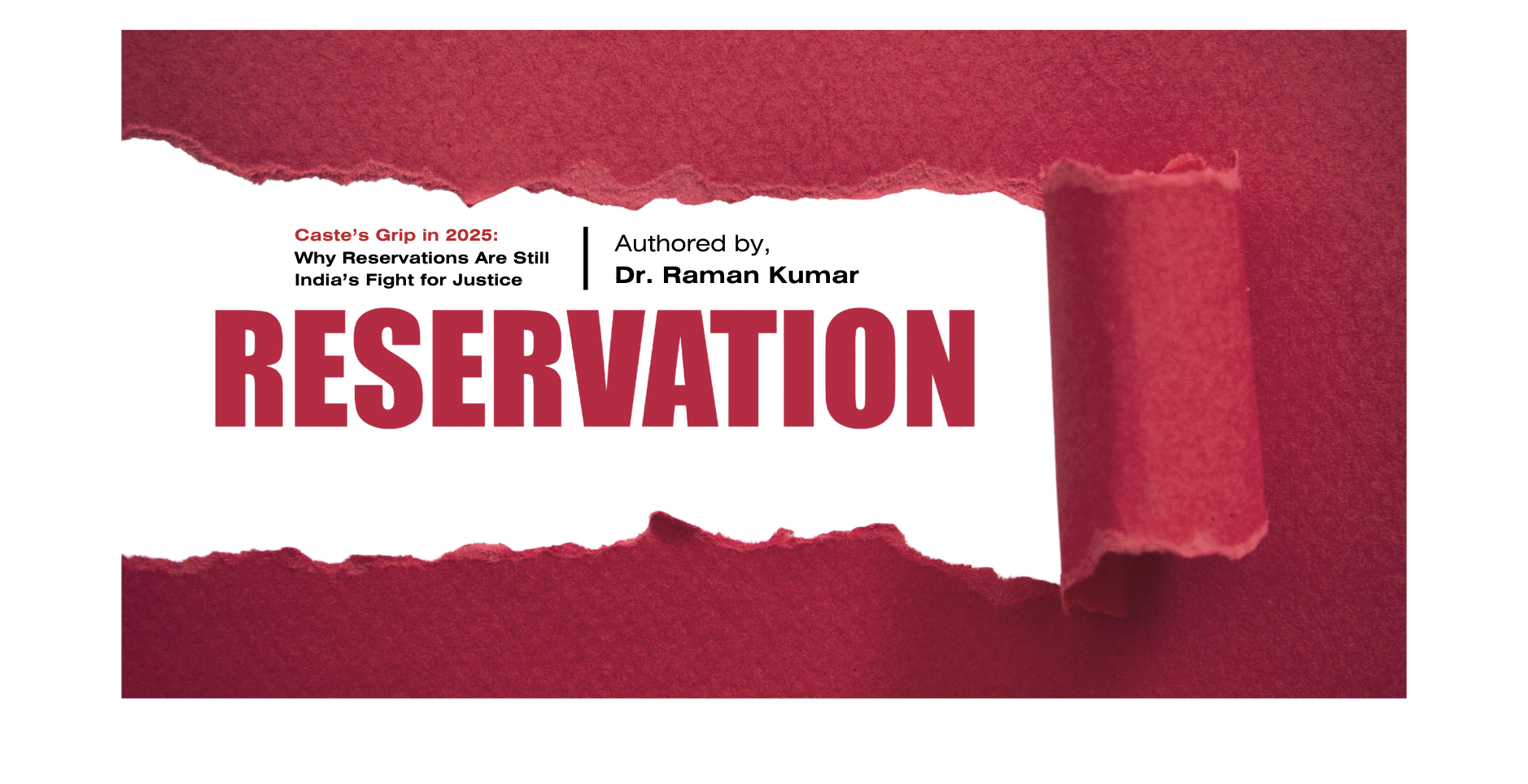
Caste’s Grip in 2025: Why Reservations Are Still India’s Fight for Justice | Dr. Raman Kumar
Introduction In June 2025, a 15-year-old Dalit student in Mainpuri, UP, was beaten by his upper-caste teacher for touching a water bottle—fracturing his finger and jaw. His “crime”? Being Dalit. This incident shows that, despite constitutional guarantees, caste still...
About Us

Centre for Studies of Plural Societies (CSPS) is founded under the aegis of Humanity International Foundation (HIF)
Read More
Get Social
Pandemic Studeis
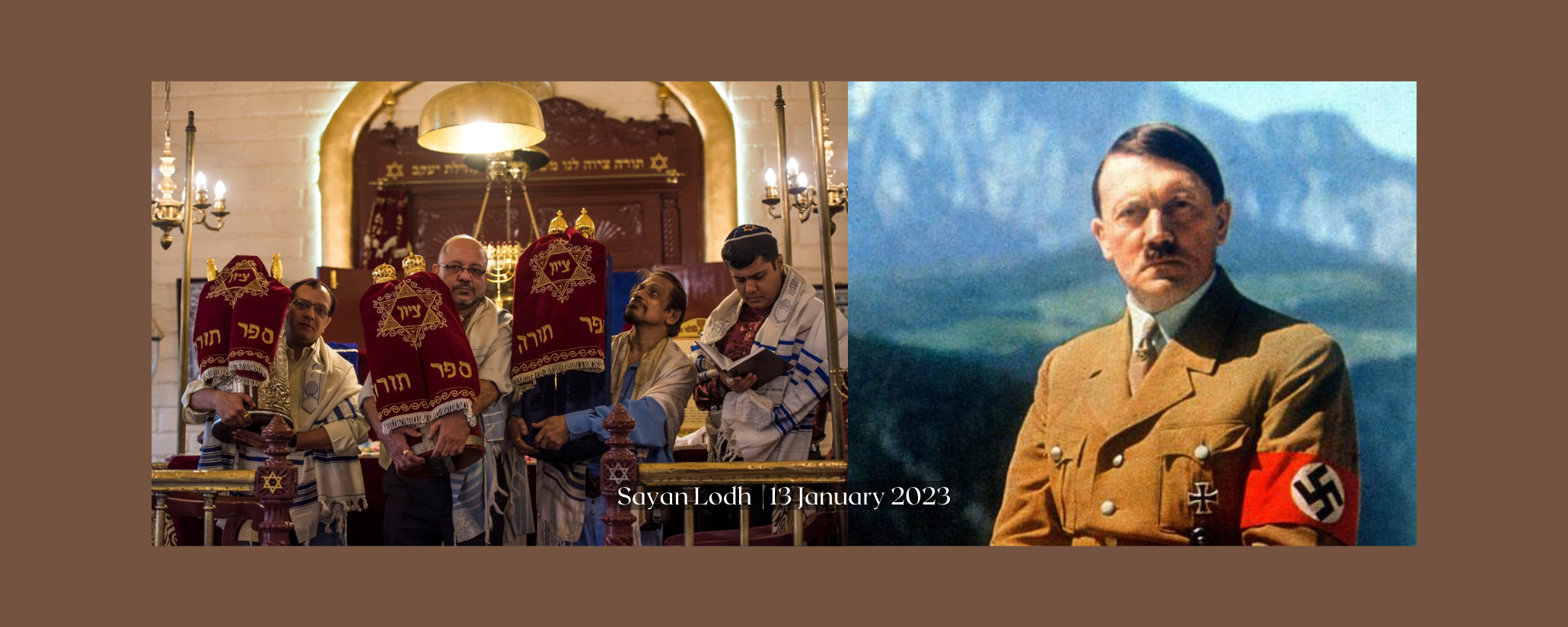
Antisemitism and Perception of Hitler in India
Antisemitism has been rhetorically used by Indian leaders (irrespective of their political or religious persuasion) since the time of the Freedom movement. Hindu nationalists like M.S. Golwalkar, K.B. Hedgewar, and V.D. Savarkar have used Nazi Antisemitic rhetoric to further their Islamophobic agenda in India to the extent of justifying Nazi treatment towards Jews and wishing for similar treatment against Indian Muslims.

Asia Bibi Exonerated, But Scope for Misuse of Blasphemy Law Remains Challenge for Pakistan
Asia Bibi’s case was politicised after the then Punjab governor Salman Taseer visited her in jail in November 2010, following the pronouncement of her death, and expressed his frustration about the misuse of blasphemy laws in Pakistan. Taseer was assassinated by his own security guard Mumtaz Qadri on 4 January, 2011. Qadri’s arrest, trial, death sentence and February 2016 execution sparked huge protests and a massive funeral procession, exonerating the killer of Taseer. Since then, religious-political groups in Pakistan had been aggressively campaigning to execute Asia and were attempting to influence court procedure by campaigning against her.

Gender Sensitisation and Treatment of Women in Indian Cinema
French feminist philosopher Simone de Beauvoir said, “Man is defined as a human being and woman as a female – whenever she behaves as a human being, she is said to imitate the male.” It is a well-known fact that art, cinema, and literature significantly impact the lives of people of an era. They cannot be considered merely sources of entertainment as they act as strong forces of power to mould and change different societal practices. It is especially true in the case of Indian cinema, as this industry is the world’s largest in movie production (with an average of 1800 or more movies produced in a year). Because of its surplus production, cinema can be considered the most accessible, hence preferred, mode of media to communicate with the public. There has been prolonged mistreatment of women in Indian cinema, and there is a need for the sensitisation of gender representation in the mainstream media. The article does a close reading of three Indian movies, Cocktail (2012), a Hindi language movie directed by Homi Adajania and Rathinirvedam (2011) and The Great Indian Kitchen (2021), Malayalam language movies directed by Rajeev Kumar and Joe Baby respectively. These three movies are taken as a mirror of society and exhibit the demeaning and trivialising of women in three major aspects: compartmentalising women into categories which do not consider their calibre or talent, objectification of women, and disregarding women as human beings in a patriarchal household setting, respectively.

Book Review: Conceptualizing Mass Violence: Representations, Recollections, and Reinterpretations
The twentieth century has been a century of mass violence and genocides beginning with Namibia (1904-1908) and ending with Rwanda (1994). Even the slogan ‘Never Again!’ raised after the Holocaust and the UN functionaries proved to be hollow, as evident in Bangladesh (1971), Burundi (1972), Bosnia and Herzegovina (1992), and Rwanda (1994), among others. The twenty-first century is no better, as evident in Myanmar’s mass violence and ongoing ethnic cleansing against the Rohingyas. The edited volume by Navras J. Aafreedi and Priya Singh fills an important gap in mass violence scholarship with a representation of scholars from all (Asia, Africa, North America, South America, Europe and Oceania/Australasia) continents (except Antarctica) covering a wide array of themes across geographies. The book has been divided into eight themes: Narratives, Revisionism and reconstruction, Education, Reflections, Trauma, Memorialisation, Literature, Dialogue, and reconciliation.

Sri Lanka Under Liquidity Trap
Sri Lanka is currently reeling under severe inflation and foreign exchange crisis with falling foreign currency assets and the government’s inability to foot the bill for essential imports. Sri Lanka has seen an enormous capital flight of this short term capital which has triggered a massive selloff in its bond market and currency. The central bank sold dollars in the foreign exchange (forex) market to stabilize the sliding rupee.

Hijab on Trial
The hijab verdict resonates with the Babri Masjid case where the court declared that the temple should be made based on ‘faith’ on the demolition site, despite endorsing the absence of historical evidence of the destruction of the temple there.
Special Report
No Results Found
The page you requested could not be found. Try refining your search, or use the navigation above to locate the post.