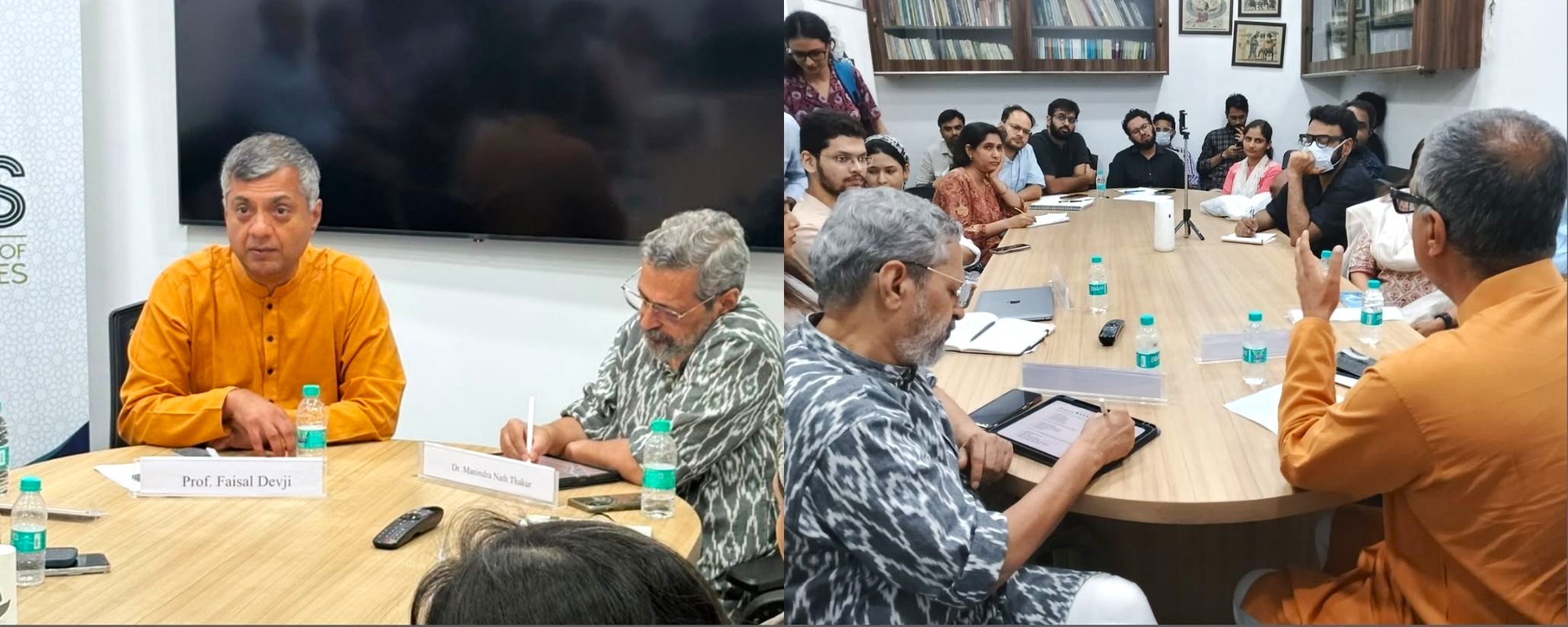
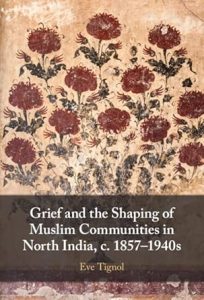
On a quiet evening that soon transformed into a vibrant exchange of ideas, the Centre for Studies of Plural Societies (CSPS) hosted a deeply reflective book discussion on Grief and the Shaping of Muslim Communities in Colonial North India by Dr. Eve Tignol. Published by Cambridge University Press in 2023, the book examines how grief—beyond being an emotion—emerged as an expression and political force that shaped the religious and communal life of North Indian Muslims under colonial rule.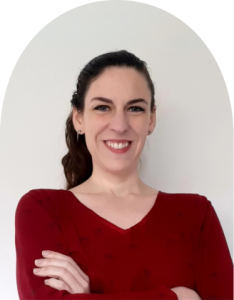
The event brought together a small but engaged group of 21 participants from a pool of 57 registrations, creating an intimate atmosphere for thoughtful dialogue. It was enriched by the presence of three distinguished scholars whose work spans the intersections of emotion, history, gender, and Muslim identities across geographies and time.
The session opened with a warm welcome and introduction. Dr. Tignol then walked the audience through the central themes of her book, presenting grief not as a passive state but as a dynamic force—one that shaped relationships, mobilised communities, and offered responses to colonial violence, reformist debates, and religious fragmentation. Drawing on Urdu elegies, print periodicals, and reformist writings, she illustrated how mourning rituals—such as majlis gatherings, marsiya poetry, and public laments—functioned as powerful tools for community formation and ethical reflection.
What resonated most in her presentation was the nuanced attention to language and affect, and how these wove together the texture of everyday life and collective memory. Dr. Tignol’s deep engagement with Urdu texts and her command of multiple North Indian languages added richness to her narrative and methodological depth to her scholarship.
Chairing the session was Dr. Azeemah Saleem, who highlighted how emotion has often been sidelined in mainstream political histories. She located the book within wider discussions of minority politics, migration, and Muslim identity, emphasising its potential to open up cross-regional dialogues, especially in contexts of displacement and exile.
The discussion was further deepened by our discussant, Dr. Sumaiyah Ahmed, whose layered reflections explored the gendered dimensions of mourning. She noted that while public expressions of grief were often articulated through male reformist voices, women remained central participants in these emotional and religious worlds. Her insights unpacked how affect and power intersect in subtle yet significant ways.
The Q&A session drew a wide range of questions—from the relationship between grief and language to the circulation of mourning practices across regions through print cultures. One participant asked whether grief could be considered a form of political resistance. Dr. Tignol responded by reflecting on the dual nature of mourning—as both a space for healing and a mode of protest.
Though modest in size, the session was rich in content, layered in interpretation, and emotionally resonant. The conversation lingered well beyond the event itself, a testament to the book’s capacity to spark reflection and dialogue.
We closed with a heartfelt note of thanks to our speakers—Dr. Eve Tignol, Dr. Azeemah Saleem, and Dr. Sumaiyah Ahmed—for their generosity of time and thought, as well as to all participants who contributed to the discussion.
At CSPS, we remain committed to fostering such spaces of dialogue that explore the many textures of human experience across disciplines, borders, and voices.