Abstract:
This Article examines how urban citizenship and the “right to the city” shape experiences of belonging and exclusion in contemporary Delhi. Drawing on Lefebvre’s critique of commodified urban space, it explores how neoliberal planning, gentrification, and forced evictions marginalize vulnerable groups. Case studies of protests and public spaces reveal how social inequalities are justified through narratives of modernization. By linking physical displacement with emotional and symbolic exclusion, the study argues that Delhi’s urban development sustains conflict over who truly owns and inhabits the city, urging more inclusive and equitable urban futures.
Whom does a city belong to?
 The question of who truly owns or inhabits a city is not a modern dilemma but one deeply rooted in philosophical reflection. In The Republic, Plato confronted the moral and structural fractures of a society split along the lines of wealth and poverty, privilege and deprivation. His inquiry into justice and civic harmony continues to echo in today’s urban realities, where cities such as Delhi exhibit similar tensions of exclusion, inequality, and contested belonging. Therefore, the question of asserting certain rights is not new, and a one-sided answer would not be sufficient. In this chapter, I will argue how the right to the city and urban citizenship, as well as the public nature of these concepts, are hindered not only by physical barriers but also by emotional, mental, and abstract obstacles. People are not naturally poor, rather they are made poor (Baxi, 1988). French philosopher Henri Lefebvre introduced the concept in 1968 in his book Le Droit à la Ville. He contended that urban space ought not to be exclusively controlled by market forces such as commodification and capitalism; rather, its administration should be a collective responsibility where the citizens themselves have their own say.
The words “city” and “citizenship” are familiar terms that frequently enter our lives. While the former is relatively easy to define, the latter remains a widely debated concept. By combining both the city and citizenship, we can reluctantly but effectively conclude that city citizenship entails more than just residing in the city. It involves accepting and being accepted by the city’s society, cultivating a shared sense of belonging, similar to Ernest Renan’s definition of nationalism, which is also a superset of citizenship—a feeling of kinship.
The anomaly for different classes, religions, castes to co-exit together has been in the history from the start. This divide is neither, nor is it something that will go away. Inequality will be there in society. Evictions are on a rise since the “planned development” and “world-class city” in making narratives have come into existence.
For instance, Ansal Plaza, Delhi’s first mall, was developed by a private group that may not have envisioned inclusivity as a core design principle. This raises important questions about accessibility and, specifically, who is granted the right to occupy and experience urban spaces. As the global population becomes increasingly urbanized, it is crucial to examine how cities are shaped and how people inhabit them in order to better understand social injustice, economic inequality, and environmental challenges. Unfortunately, contemporary patterns of urbanization often intensify these very problems, underscoring the need for cities to serve as key sites for both diagnosis and remedy.
In Delhi, public protests reveal much about how urban space is negotiated and politicized. Demonstrations are no longer limited to designated venues such as Jantar Mantar; they now emerge in spaces that were never formally intended for political assembly yet have acquired powerful symbolic meaning. The CAA–NRC protest in Shaheen Bagh, the Jan Lokpal movement at Ramlila Maidan, and the Farmer’s Protest on Delhi’s borders each illustrate how marginalized voices reclaim space and visibility. Similarly, the annual Pride March in Connaught Place exposes the invisible social boundaries that govern who may come close to or be recognized by the state. These barriers, far from being incidental, are embedded in the very fabric of the public sphere.
Another instructive example is Dilli Haat, a centrally located, European-style open marketplace designed to encourage public interaction. Yet one must ask: who truly accesses and enjoys such spaces? Are they open to everyone, or do they have an invisible barrier and primarily cater to the urban middle and upper classes, leaving the economically marginalized excluded from the promise of public life?
Thomas C. Schelling’s (1971) research paper provides a concise explanation of the phenomenon of segregation. His study demonstrates that significant segregation can occur within cities, even when individuals have only a slight preference to before being surrounded by people from their own ethnic group (Schelling, 1971). For instance, if a Muslim resident moves to a predominantly Hindu neighborhood, the most extreme Hindu individuals, who harbor strong animosity towards Muslims, will choose to relocate to a different area. As more Muslims subsequently move into the neighborhood, once a certain threshold is reached (referred to as a “tipping point” by Schelling), all Hindus will completely abandon the area. According to Schelling’s model, even weak individual preferences result in significant levels of segregation at the urban level.
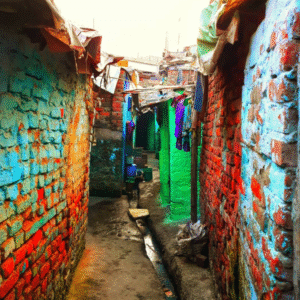
In his influential 1968 research paper, Kain detailed how segregation leads to a lower availability of employment opportunities for disadvantaged groups. He suggested that since job and housing decisions are made simultaneously, housing discrimination is likely to increase travel costs, making it challenging for disadvantaged groups to obtain jobs in the prime locations of a city. Segregation does not result from poverty; instead, it causes poverty (Kain, 1968).
Additionally, the city is also a site of contention between different social classes, including the wealthy and the poor, as well as the powerful and the popular, in regards to the allocation and utilization of urban spaces. Drawing upon instances from historical cities during the medieval and ancient periods, Lefebvre illustrates how individuals with affluence and influence employ their resources to assert their ownership over physical and symbolic domains within the urban landscape. This is manifested through the ostentatious construction of monuments, fountains, and other decorative elements (Sabhlok).
Urban planning has always conveniently done away with the issue of illegality and informal settlements. Settlements which are now formal used to be informal during a point of time.
So, what and who makes the city? It to be formalized by the Master Plans a city makes? Or is t by the fellowship of those who live in it? Urbanization is exclusionary. Exclusionary to the point where it is hard to co-exist with a person from different class.
Historically, in India, the communities that had been at the margins (Dalits/Scheduled Castes, and Adivasis/Scheduled Tribes) have had to deal with great obstacles as a result of the nation’s “development” model. They are affected by forced evictions and displacements in a way that is not even across board. Even though they have legal and constitutional safeguards, Dalit and Adivasi communities are still being dispossessed of their land forcibly for different reasons among them projects on infrastructure, beautification programs and campaigns aimed at removing ‘encroachments’ (HLRN, Forced Evictions in India, 2023).
In Delhi, several settlements belonging to the Gadia Lohar (ironsmith) community, who were previously nomadic, were recently demolished. This has left numerous families homeless in areas like Bawana Village, Deenpur Village, Gokulpuri, Karkardooma, Manglapuri, Shahdara, Dhasa Najafgarh, Prahladpur, Shiv Vihar, and Madangir. Women and children are particularly affected by forced evictions, displacement, and inadequate resettlement. Women face multiple challenges after eviction, including the loss of livelihood and access to food, breakdown of social support systems, negative health consequences, and increased vulnerability to gender-based violence. (ibid). Forced evictions have immediate and long-term detrimental effects on children. They experience psychological trauma, mental illness, fear, insecurity, anxiety, disruption of education, compromised health, and increased susceptibility to sexual abuse and violence. (ibid)
Justifying Inequalities
Urban development based on neoliberalism favors the interests of developers and investors. As a result, it displaces some groups from their living spaces through gentrification which in turn worsens inequality as well as denies some people benefits or resources within a city (Khalatbari, 2024). In most cases, institutions of urban governance such as local authorities and planning departments always ignore marginalized communities when making decisions about their welfare (Meerow, Pajouhesh & Miller, 2019).This is where the right to city comes in as it provides for challenging such inequalities. It demands fairness so that all inhabitants regardless of their economic background can enjoy full rights in relation to social services provision among other things (Brenner & Theodore, 2002). In short words “Right To City” is considered more of a slogan than an ideal solution but nevertheless serves important framework within which we should critically examine our positions vis-a-vis planning sustainable cities.
Convenient Blind Eye
Urban development projects often use language of improvement and modernization to hide the displacement and suffering of vulnerable populations. This language is used to gain public support and justify removing what is seen as “undesirable” from the city. In Delhi, the beautification projects have been accompanied by a narrative of progress that ignores the human costs of displacement. (Guardian, 2023) (CNN, 2023). Prioritizing a clean and orderly cityscape for the G20 Summit in Delhi has resulted in more policing and the eviction of homeless individuals, effectively making their existence a crime.
In Delhi, this takes the form of evictions and demolitions, supposedly justified by urban improvement goals. The lack of legal protections for the homeless makes them even more vulnerable, with few options for fighting displacement. The concept of urban citizenship challenges the exclusionary practices common in modern urban development. By examining who is allowed in the city, this Artilce has shown how justifying inequalities through neoliberal narratives and ignoring the displaced emphasize the need for more inclusive and fair urban policies.
References:
- Baxi, U. (1988). Law and Poverty, Critical Essays. University of Michigan.
- Schelling, T. C. (1971). DYNAMIC MODELS OF SEGREGATION. Journal of Mathematical Sociology, 1971, Vol. 1, pp 143-186 .
- Kain, J. F. (1968). Housing Segregation, Negro Employment, and Metropolitan Decentralization. The Quarterly Journal of Economics, Volume 82, Issue 2, Pages 175–197,.
- Sabhlok, A. (n.d.). Right to the City: Henri Lefebvre and David Harvey. https://ebooks.inflibnet.ac.in/socp07/chapter/right-to-the-city-henri-lefebvre-and-david-harvey/.
- HLRN. (2023). Forced Evictions in India. New Delhi: Housing and Land Rights Network.
- Khalatbari, A. (2024). A Critique of Neoliberal Urbanization and its Downsides on Housing Policies. Preprints, Khalatbari, A. A Critique of Neoliberal Urbanization and its Downsides on Housing Policies. Preprints 2024, 2024040923. https://doi.org/10.20944/preprints202404.0923.v1.
- Meerow, S., Pajouhesh, P., & Miller, T. R. (2019). Social equity in urban resilience planning. The International Journal of Justice and Sustainability, Volume 24, 2019 – Issue 9, https://doi.org/10.1080/13549839.2019.1645103.
- Brenner, N., & Theodore, N. (2002). Cities and the Geographies of “Actually Existing Neoliberalism”. Antipode: A Radical Journal of Geography, Volume 34, Issue 3 p. 349-379, https://doi.org/10.1111/1467-8330.00246.
- CNN. (2023). India, advocate for the global poor, clears slums as G20 draw near. https://edition.cnn.com/2023/09/04/india/g20-summit-india-slum-home-demolitions-intl-hnk-dst/index.html: Rhea Mogul, Vedika Sud, Sania Farooqui.
- Guardian, T. (2023). Ashamed of our presence’: Delhi glosses over plight of poor as it rolls out G20 red carpet. https://www.theguardian.com/world/2023/sep/08/ashamed-of-our-presence-delhi-glosses-over-plight-of-poor-as-it-rolls-out-g20-red-carpet: Aakash Hassan; Hannah Ellis-Petersen.
Author’s Bio: Abin Abraham Kurian works as the Research Coordinator at the Centre for Studies of Plural Societies (CSPS). He is a postgraduate in Development Studies. His research interests lie in questions of urban inequality, governance, and social justice.