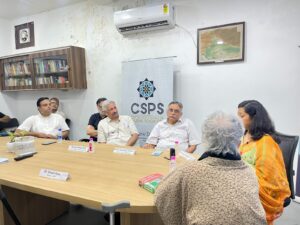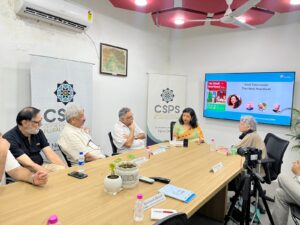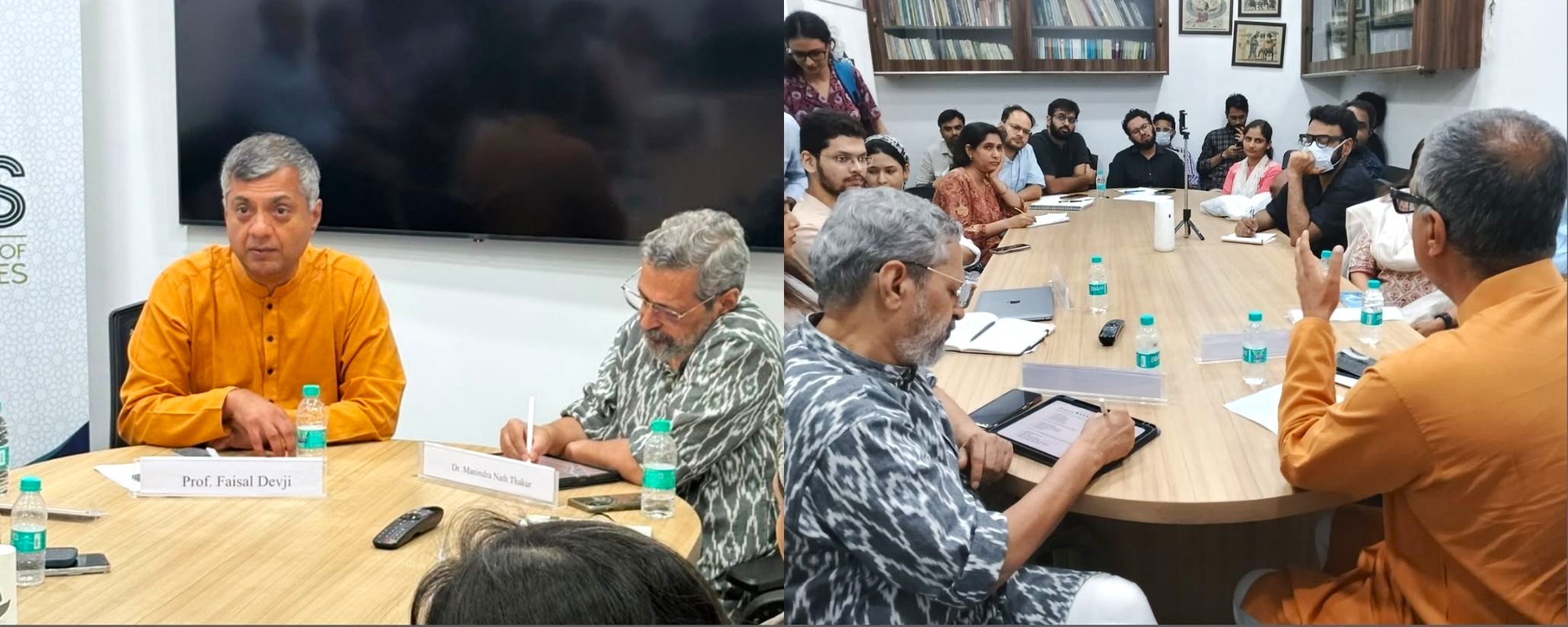
The Centre for Studies of Plural Societies (CSPS) organised a book discussion on The Hindi Heartland: Religion,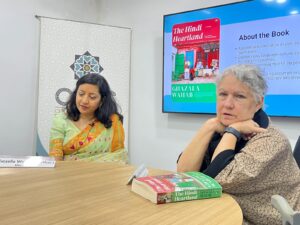
Caste, Class and Politics by noted journalist and author Ghazala Wahab. The event brought together a distinguished panel comprising Prof. Amar Farooqui (Historian, University of Delhi), Dr. Peggy Mohan (Linguist and Author), and Mr. Anwarul Hoda (Economist and former WTO Deputy Director-General).
The discussion opened with Ghazala Wahab presenting the central themes of her book, which examines the Hindi-speaking belt of North India as the epicentre of social, political, and cultural transformations. She highlighted how caste hierarchies, religious fault lines, and economic inequalities intersect in the region, shaping its political identity and national influence. Wahab argued that the heartland’s dominance in Indian politics cannot be understood without unpacking the layered histories of marginalisation, mobility, and resistance within it.
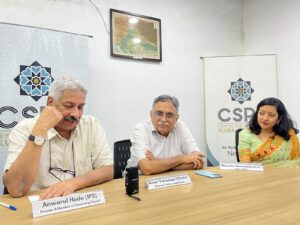
Prof. Amar Farooqui, in his response, situated the book within the longer historical trajectory of North Indian politics, drawing attention to how colonial policies, agrarian structures, and the reconfiguration of caste identities continue to impact electoral and social dynamics in the region.
Dr. Peggy Mohan offered reflections on the linguistic dimensions of the Hindi heartland, stressing that questions of identity and belonging are inseparable from language. She noted how the imposition and standardisation of Hindi has influenced caste, class, and regional relations, often privileging certain voices while silencing others.
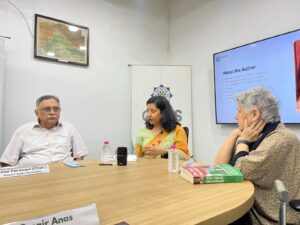
Mr. Anwarul Hoda added an economic perspective to the conversation, linking the region’s development patterns, agrarian economy, and uneven growth to the persistence of inequality and social stratification. He emphasized the need to view politics in the Hindi belt through the lens of resource distribution, migration, and policy failures as much as through religion and caste.
The audience engagement was rich and wide-ranging, with participants raising questions on electoral reform, the persistence of caste hierarchies in modern institutions, the role of media in shaping perceptions of the heartland, and the implications of demographic change.
The discussion concluded with a recognition of The Hindi Heartland as a timely and important intervention in debates on democracy, representation, and social justice in India. It underscored CSPS’s continued commitment to hosting critical, interdisciplinary conversations on the pressing issues shaping Indian society and politics today.