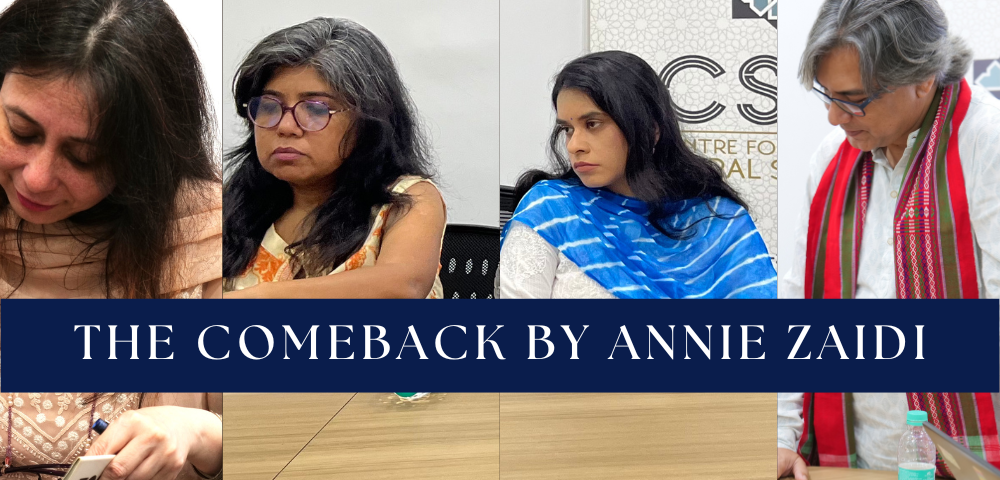
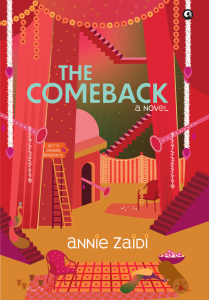
 The Centre for Studies of Plural Societies (CSPS) hosted a compelling book discussion on The Comeback, the latest novel by Annie Zaidi—an acclaimed author known for her sharp literary sensibility and deep engagement with issues of identity, memory, and social inequality. The event sought to unravel the layers of the novel while drawing connections between literary imagination and contemporary socio-political realities. It brought together writers, scholars, students, and literature enthusiasts in a meaningful conversation on the affective, aesthetic, and political dimensions of storytelling.
- Author: Annie Zaidi
- Chair: Anubha Yadav (Writer, Filmmaker, Academic)
- Moderator: Dr. Ankita Saxena (Fellow, CSPS)
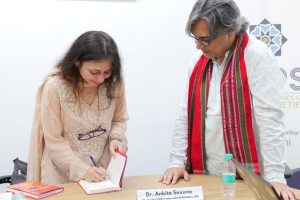 The session began with Dr. Ankita Saxena’s thoughtful opening remarks, which set the tone for the discussion by positioning.The Comeback as a literary work that invites contemplation on the complexities of return, both in geographical and emotional terms. She highlighted the novel’s ability to capture the subtle undercurrents of ambition, estrangement, and longing in the lives of its characters.
Annie Zaidi, in her authorial reflections, took the audience through her process of writing The Comeback, explaining how the story was shaped by the emotional and psychological landscape of its protagonist. She emphasised the role of memory and unresolved aspiration in defining personal choices, and how the act of ‘coming back’ is often riddled with uncertainty, contradiction, and discomfort. Zaidi’s candour about her craft—how she employs minimalism and silence to evoke internal conflicts—offered valuable insight into the literary choices that define her work.
Anubha Yadav offered a close and critical reading of the novel. She foregrounded its feminist undertones, highlighting how the narrative resists grand, heroic arcs in favour of exploring quieter, more intimate forms of resistance and resilience. Yadav noted that the novel’s characters, particularly its female voices, operate in morally complex and emotionally turbulent terrains. Her analysis drew attention to the structural inequalities embedded in everyday life, which Zaidi subtly yet powerfully captures in her storytelling. She also spoke of the novel’s form—its deliberate pacing, introspective tone, and refusal to offer neat resolutions—as an act of political resistance in itself.
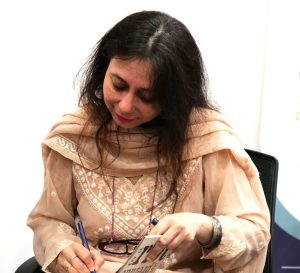
Dr. Saxena guided the discussion further into questions of narrative ethics, especially in a world increasingly hostile to ambiguity and dissent. She invited reflections on the intersections between fiction and social critique, and how Zaidi’s writing not only tells a story but also unsettles dominant norms around success, belonging, and personal transformation.
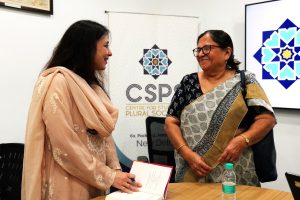
The Q&A session was lively and layered, with attendees asking questions that ranged from the personal (how much of the author’s life shaped the novel) to the political (how does fiction serve as a mode of critique and reflection in contemporary India). Several participants reflected on the emotional impact of the book and its ability to evoke difficult, sometimes uncomfortable truths about power, gender, and identity. Zaidi’s responses were thoughtful and generous, offering both practical insights into the writing process and reflections on the ethical dilemmas faced by writers today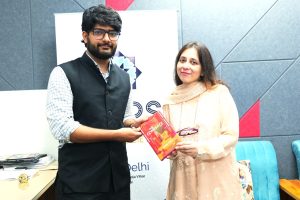
The discussion concluded with words of appreciation and reflection by Dr. Ankita Saxena. She thanked Annie Zaidi and Anubha Yadav for their evocative engagement and the audience for their active and thoughtful participation. The event reinforced CSPS’s belief in literature as a site of plural imagination, critique, and dialogue. Through conversations such as these, CSPS continues to cultivate spaces that bridge the literary and the political, offering fertile ground for writers, thinkers, and readers to engage deeply with the world and with one another.