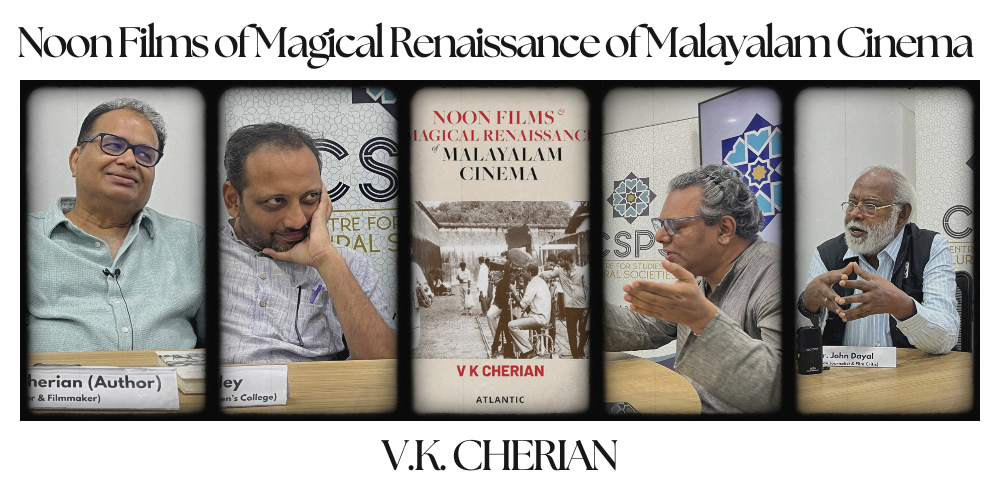
On 15th May 2025 at 4:00 PM, the Centre for Studies of Plural Societies (CSPS) hosted an in-person event titled “Noon Films and the MAGICAL Renaissance of Malayalam Cinema.” The session was conceptualised as part of CSPS’s ongoing efforts to explore regional cultural productions and their intersections with questions of politics, representation, and aesthetics. With 16 registrations and 11 attendees, the event retained an intimate and highly engaged atmosphere, conducive to serious dialogue and open exchange. Participants included students, researchers, filmmakers, and scholars with a shared interest in Indian cinema, particularly the evolving contours of Malayalam filmmaking.
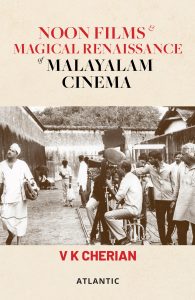
The discussion revolved around what has come to be popularly known as “Noon Films”—a body of contemporary Malayalam cinema marked by realism, narrative subtlety, and political quietude. Unlike the formulaic structure of mainstream Indian cinema, these films focus on the minutiae of everyday life. They resist spectacle and melodrama, opting instead for stillness, ambiguity, and slow storytelling. Participants observed how such a narrative style brings cinema closer to lived experience and social complexity, making space for moral dilemmas and silences that are rarely captured in commercial frameworks.
A significant aspect of the conversation was the regional specificity of these films. Rooted deeply in Kerala’s cultural, linguistic, and environmental landscape, Noon Films remain attentive to local contexts while simultaneously engaging global themes—such as migration, loneliness, ecological degradation, and the effects of technological alienation. The films’ ability to weave the particular into the universal was appreciated as a mark of their aesthetic maturity and narrative depth.
The conversation also focused on how these films reflect a transformation in gendered representation—particularly of masculinity. Unlike the dominant portrayal of hypermasculine, invulnerable heroes in Indian cinema, Noon Films often present male characters who are emotionally expressive, morally conflicted, and vulnerable. Similarly, women in these films are not reduced to supporting roles but are written as fully developed characters with agency, contradictions, and narrative presence. The subtle and layered depiction of gender was identified as one of the most progressive ele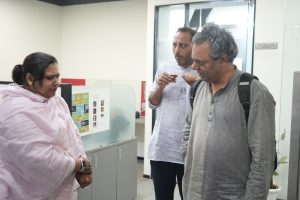
ments of this cinematic movement.
Another critical point raised was the political nature of Noon Films. While these films do not adopt an overtly ideological tone, they remain deeply political in content and form. Questions of caste, class, religious identity, and state repression are handled with narrative sensitivity—woven into the structure of the plot and character development rather than delivered as external commentary. This quiet form of resistance, embedded in realism and humanism, was viewed as a powerful method of engaging audiences without preaching to them.
In addition to thematic concerns, participants also discussed the changing production cultures within Malayalam cinema. With the rise of independent studios, actor-producer collaborations, and more accessible distribution platforms, the space for non-metropolitan voices and first-generation filmmakers has widened. This decentralisation of filmmaking was seen as crucial to the ongoing creative experimentation and narrative freshness in Malayalam cinema today.
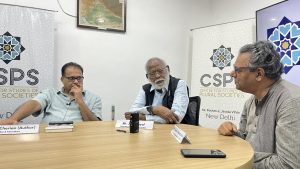
Despite the small group, the event generated a dynamic, reflective, and intellectually rich discussion. Attendees expressed keen interest in continued engagement with regional film cultures and proposed similar sessions focused on other linguistic cinemas in India, such as Bengali, Marathi, Assamese, and Manipuri cinema. The idea of forming a film club or curated screening series at CSPS was also informally floated.
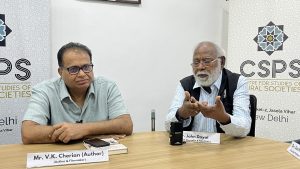
The event reaffirmed CSPS’s commitment to critically engaging with cultural forms as sites of social imagination and political meaning-making. Malayalam cinema’s recent renaissance represents more than a shift in film aesthetics—it signifies a deeper reorientation in how stories are told, whose lives are deemed cinematic, and what values inform our engagement with art. Going forward, CSPS intends to build on the momentum of this session by exploring regional cinemas in other languages, organising public screenings, and facilitating cross-disciplinary dialogue between scholars and practitioners of the arts.
This event stands as a testament to the power of cinema—not just as entertainment, but as a complex cultural text that offers insight into our plural realities, evolving politics, and collective futures.
— Mohammad Zaid