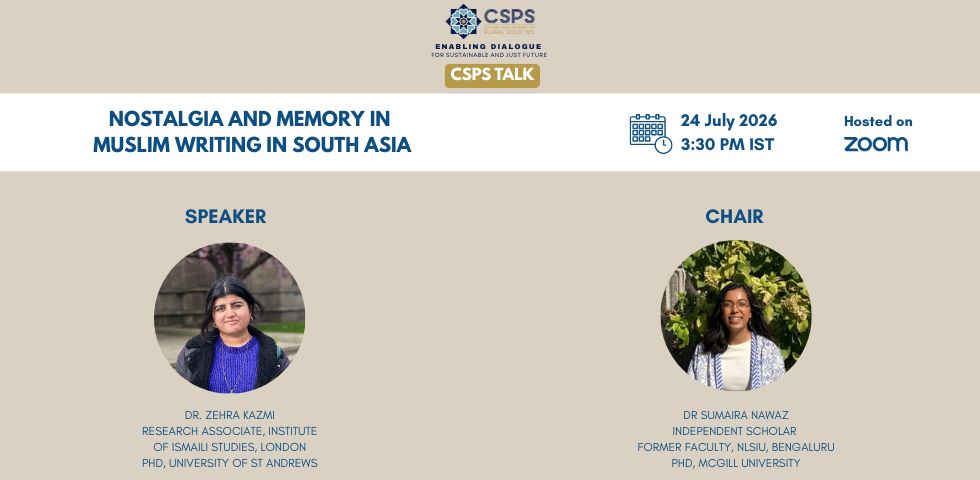
This session introduces the research underpinning the monograph project, Indo-Muslim Nostalgia: Memory, Modernity and the Nation, presenting an analysis of nostalgia within Indo-Muslim literary aesthetics. Contextualizing the study within the political aftermath of the 2019 anti-NRC-CAA protests, the discussion traces the roots of this specific affect through the history of Muslim South Asia, accounting for the repeated traumas of colonialism and Partition. From Mirza Ghalib’s lament for a ruined Delhi post-1857 to the Shi’i aesthetics of grief and remembrance during Muharram, various currents of Indo-Muslim history and culture converge in the works of twentieth-century modernist authors Intizar Husain and Qurratulain Hyder. Their novels mourn a civilizational loss while posing profound questions about how shared pasts continue to shape the contemporary future.
The discussion will commence on 24 July 2026 (Friday) at 3:30 PM IST via Zoom. Please register to secure your spot.
About the Speaker
Dr. Zehra Kazmi recently completed her PhD at the University of St Andrews and holds an MPhil from the University of Cambridge. Her doctoral research explores historical memory and nostalgia in South Asian Muslim writing, analyzing the works of prominent authors against the backdrop of cultural disintegration and sectarian violence in contemporary India. An active academic and public writer, her work spans prominent peer-reviewed journals and major media outlets like The Indian Express. She is the co-founder of the Tasavvur Collective, a research consortium focused on the literary and historical representations of South Asian Muslims.
Chair
Dr. Sumaira Nawaz is an independent scholar and a former faculty member at the National Law School of India University (NLSIU), Bengaluru. She received her PhD from McGill University’s Institute of Islamic Studies, focusing on global intellectual history and South–South relations. Her research explores how questions of constitutional morality, minority rights, and modern information culture arose in South Asia in response to literary networks moving through neighbouring Muslim Empires. By foregrounding the study of Persian and Urdu periodicals, Dr. Nawaz offers a fresh perspective on how South Asian Muslim publics historically perceived and intervened in political upheavals across the Ottoman Empire, Qajar Iran, and Afghanistan.