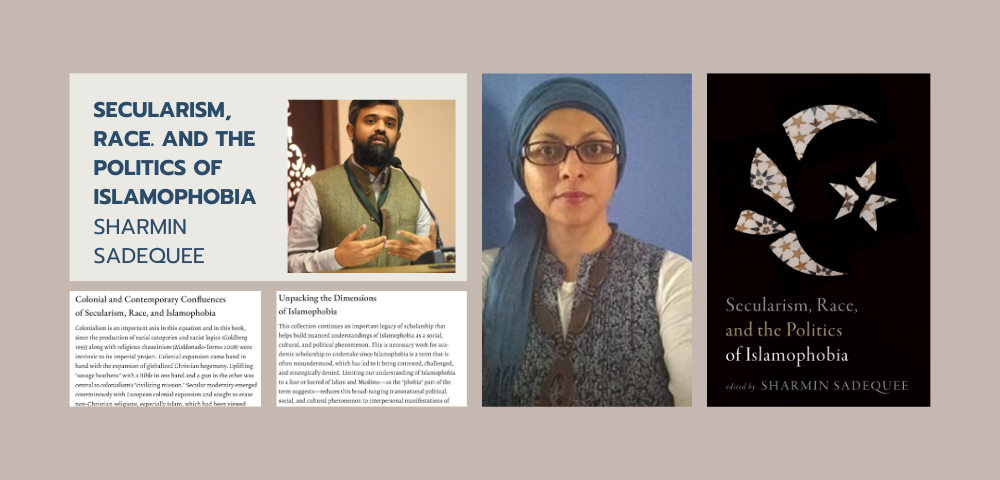
The Centre for Studies of Plural Societies (CSPS) organised a two-hour virtual discussion on Secularism, Race, and the Politics of Islamophobia, a timely and incisive volume edited by Dr. Sharmin Sadequee.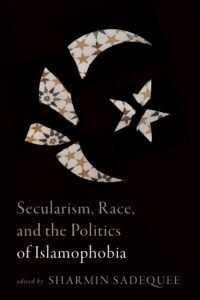
The book interrogates the global intersections of secularism, racialisation, and anti-Muslim prejudice, offering theoretical depth and empirical insights into one of the most urgent challenges facing democracies today.
The session was chaired by Dr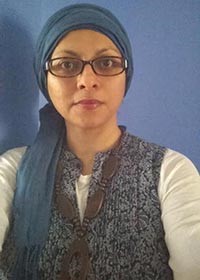 Irfanullah Farooqui, who set the tone by situating the book within wider conversations on modernity, power, and religious difference. He emphasised the need to move beyond surface-level understandings of Islamophobia and instead unpack its deep structural entanglements with race, coloniality, and state practices.
Dr Sharmin Sadequee opened the discussion by walking participants through the intellectual and political stakes of the volume. She underlined how Islamophobia is not an isolated phenomenon but one that draws strength from histories of racialisation, settler colonialism, and capitalist exploitation. The essays in the collection bring together perspectives from diverse geographies, thereby highlighting both the global nature of Islamophobia and its specific local manifestations.
The panel of co-authors—including Khaled Al-Qazzaz, Jinan Bastaki, Dustin J. Byrd, Zeinab Diab, Alain Gabon, Nakita Valerio, Fatimah Jackson-Best, Roshan Arah Jahangeer, Areesha Khan, and Saul J. Takahashi—expanded on their contributions. They addressed themes such as the securitisation of Muslim identities, the complicity of liberal secularism in sustaining Islamophobia, and the erasure of Muslim voices from dominant discourses on citizenship and belonging.
What emerged powerfully was the book’s insistence on connecting theory with lived realities. From surveillance regimes in the West to the marginalisation of Muslim minorities in South Asia, the discussion underscored how Islamophobia is embedded in everyday governance and social life.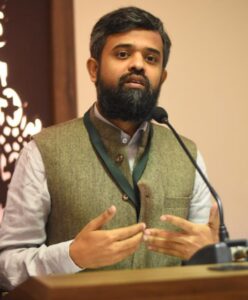
Audience participation further enriched the event, with questions ranging from the role of international law in addressing Islamophobia to the possibilities of transnational solidarities. The conversation touched on strategies for resistance, including the importance of education, coalition-building, and reclaiming public narratives from dominant power structures.
The event concluded with an acknowledgement of the urgent need for critical scholarship on Islamophobia that does not remain confined to academic spaces but actively engages with policy, activism, and community struggles.
By bringing together scholars, practitioners, and activists from across the globe, the discussion reaffirmed CSPS’s commitment to fostering critical dialogue on the politics of race, religion, and pluralism.